
Late-October 2026 Housing Market Update: Rates Steady at 7.40% as September Sales Rebound
The 30-year fixed mortgage rate held at 7.40% for a second straight week, September existing-home sales rebounded 1.5% nationally, and Indiana's median sale price kept climbing even as statewide inventory grew for a 31st consecutive week. Here is the late-October 2026 market picture for Hamilton and Boone County buyers and sellers.

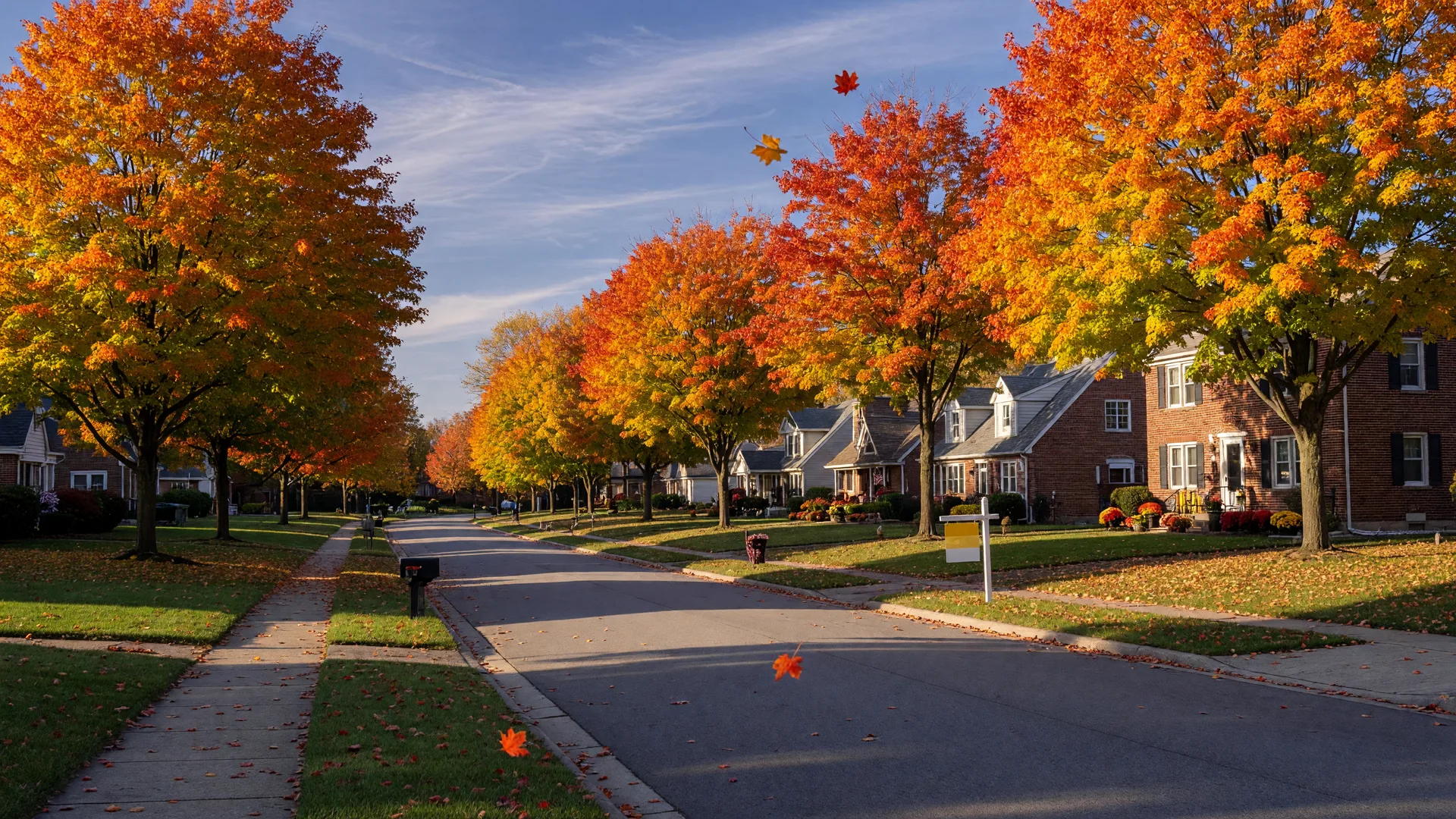
This was the week the fall market found its footing. Freddie Mac's October 15 release held the 30-year fixed rate at 7.40% for a second straight week, ending a run of seven consecutive weekly increases. The same week, the National Association of REALTORS reported September existing-home sales up 1.5% month-over-month, and Indiana's September numbers landed with the statewide median price up 3% and inventory climbing a 31st straight week.
The local story keeps outperforming the national one. Hamilton County still posts the highest year-to-date median of any central Indiana county, at roughly $474,900, while Zionsville holds a three-month median near $750,000 and Whitestown keeps selling new construction to buyers who want Boone County schools without the premium sticker. More homes, steadier prices, and buyers with real negotiating power: that is the late-October 2026 reality across Fishers, Carmel, Noblesville, Westfield, Zionsville, and Whitestown.
The Federal Reserve's next rate decision lands October 28, one week from today. This update walks through the new numbers, what they mean on the ground, and a straight-talk plan for buyers and sellers before the calendar turns to November.
Sales Finally Rebounded, and the Deepest Supply Since 2019 Is Doing the Heavy Lifting
The September existing-home sales report, released October 13, gave the market its first clean rebound in months. Sales rose 1.5% month-over-month to a seasonally adjusted annual rate of 3.99 million, with the Midwest holding steady even as the South and West led the monthly gains and all four regions remained down year-over-year. That 3.99 million pace is still about 2.2% below September of last year, so the trend is stabilization rather than boom.
Inventory is the real headline. The report put the supply of homes for sale at 1.60 million units, a 4.8-month supply and the highest reading since November 2019. That is a significant shift from the two-to-three-month markets that defined the post-2020 years, and it is showing up in behavior: homes are sitting longer, and buyers are negotiating again. NAR economists highlighted improved buyer negotiating power from the higher inventory and longer days on market.
Prices, for now, refuse to fall. The national median existing-home price reached $417,500 in September, up 1.3% year-over-year, marking the 39th consecutive month of annual price gains. Steady prices plus growing supply is a textbook rebalancing, and it is exactly the kind of market where a well-prepared buyer can trade a higher rate for meaningful concessions.
Indiana's September: Prices Up 3%, Sales Softer, Inventory Building Week After Week
The Indiana Association of REALTORS September market report tells a story that is nearly the mirror image of the national narrative. Statewide closed sales totaled 7,203, down 4% year-over-year, and IAR partly attributed the dip to rising mortgage rates, noting many of those contracts were signed when rates were still in the mid-6s. At the same time, the statewide median sale price rose 3% to $278,000, and homes were selling at about 95.2% of original list price on average.
Inventory keeps building. Indiana's available listings grew for a 31st consecutive week, with roughly 7,205 average daily available listings in the week of October 5. To put that in context, the state set an all-time median price record of $290,000 in June while first-half closed sales ran about 2.5% above the same period a year ago. The summer was strong; the fall is slower-paced with more choices, and that is the trade-off buyers are stepping into.
What does 95.2% of list price mean in practice? It means the days of automatic over-asking offers in every zip code are over, and realistic pricing plus solid preparation is what gets a home sold. It also means a buyer who writes an offer at or slightly above list in a well-priced community can still win, while a buyer who waits for a discount in the hottest neighborhoods may be waiting a long time.
The Local Read: Premium Prices, Deep Inventory, and Real Leverage for Buyers
Hamilton County continues to command the highest year-to-date median of any central Indiana county. F.C. Tucker's market watch data puts the 2026 countywide median near $474,900, and my Market Report page tracks the city-by-city detail, including the premium carved out by Carmel's Arts District addresses, Westfield's Grand Park corridor, and the lake-adjacent neighborhoods of Fishers and Noblesville.
Central Indiana's inventory picture is the deepest in nearly a decade, up about 17.8% year-over-year in the latest MIBOR reading, and that breadth is showing up in days on market across the northern suburbs. Buyers are booking more tours, sellers are sharpening their pricing and presentation, and both sides are finding that offers get negotiated rather than simply accepted.
Boone County rides its two stars. Zionsville holds a three-month median near $750,000, up more than 5% year-over-year, sustained by the brick-paved village, Zionsville Community Schools, and easy access to both I-465 and the north side. Whitestown keeps moving new construction at a steadier price point for buyers who want Boone County schools and a newer home without the Zionsville sticker. That two-speed dynamic, premium resale in one town and attainable new build in the next, is one of the most interesting stories in the region this fall.
Buyers: Three Moves to Make Before the October 28 FOMC Meeting
Shop the full payment, not the headline rate
At 7.40%, a smaller home in a value corridor like Whitestown or a maintenance-free resale in a 55+ community can cost less each month than a larger home at the same rate in a premium zip. Run the full payment, property taxes, insurance, and HOA dues included. This site's affordability guide walks through the 28/36 math with a calculator so you know your real range before you tour.
Put concessions and buydowns to work
With inventory building statewide and homes selling at about 95.2% of list price, sellers across central Indiana are increasingly offering closing-cost help and rate buydown contributions to keep deals moving. A seller-paid buydown can meaningfully reduce your first-year or two-year payment, which is usually a better tool against a 7.40% rate than waiting for a rate cut that may or may not arrive before spring.
Compare the builder incentives before you decide new versus resale
Builders in Westfield, Whitestown, Noblesville, and Fishers are competing hard for fall buyers with rate buydowns, closing-cost credits, and option packages. For many buyers, the builder-incentive math flips the decision between a move-in-ready resale and a new build. I pull current incentives before touring so we compare apples to apples.
Add off-market to the search in the hot neighborhoods
Even in a balanced market, the strongest homes in the best school districts still move quickly. That is where creative search strategies pay off: off-market listings, pre-listing outreach to owners, and direct seller conversations have helped my buyers land homes that never appeared in the public feeds. When rate-shy buyers sit out, a prepared buyer with an off-market pipeline has an unusual edge.
Sellers: Your Advantage in a Slower, More Balanced Market
The sellers who win this market are the ones who price to today's buyers rather than to last spring's. Indiana homes are selling at about 95.2% of original list price on average, which means a home priced correctly from day one still gets there quickly, while an overpriced listing sits, accumulates market time, and ends up selling for less than a sharp launch price would have commanded.
October and November remain quiet power months for sellers. The buyers who are active right now are serious, many motivated by relocation timing or a year-end closing, and inventory is deep enough that a well-priced, beautifully presented home stands out. Fresh paint, decluttered rooms, and professional photography still separate the homes that go under contract in days from those that linger into December.
If you are weighing a move and worried about giving up a low-rate mortgage, remember that today's buyers are negotiating seller concessions precisely because your low rate and your equity can be part of the deal. A local agent who knows the comps, the concession structure, and the buyer pool in your specific neighborhood is worth far more than a national forecast. If you are ready to talk numbers, call or text me at 317-777-9146 anytime.
What the Week Before the Fed's October 28 Meeting Actually Changes
Nobody knows exactly where the Federal Reserve lands on October 28, and I will not pretend otherwise. What we do know is that rates held steady for two consecutive weeks for the first time since August, national sales finally rebounded, and Indiana's market has more inventory and steadier pricing than at any point in recent years.
Waiting has a real cost in this specific market. Local inventory is the deepest in nearly a decade, negotiating leverage is genuinely with buyers, and when rates eventually ease, demand historically returns quickly and that leverage evaporates. The buyers who moved into today's market are often the ones who secured concessions, avoided bidding wars, and locked in a home with a payment they can live with.
Rates are a national number. Your payment, your neighborhood, and your negotiating position are local. That is the difference a local agent makes.
Sources
Freddie Mac Primary Mortgage Market Survey, weekly release of October 15, 2026. National Association of REALTORS Existing-Home Sales report, September 2026, released October 13, 2026. Indiana Association of REALTORS September 2026 monthly market report, released October 15, 2026, and IAR's 2026-at-the-Half mid-year report. F.C. Tucker Company / MIBOR central Indiana market watch data. Redfin and Zillow Hamilton and Boone County medians and home values, fall 2026. MIBOR market data as published on EverythingHamiltonCounty.com's Market Report page.
Mortgage rates change daily and vary by lender, credit profile, loan program, and down payment. Verify current rates, pricing, and incentives directly with a lender or a licensed local real estate professional before making decisions. This article is for informational purposes only and is not financial advice.
Ready to Act Before November?
Whether you are buying, selling, downsizing, or just curious what your home is worth, let's put the real numbers together. I work Fishers, Carmel, Noblesville, Westfield, Zionsville, and Whitestown every day, and I will give you a straight answer.